We asked an AI for a carousel and it designed it with code
We asked an AI for a LinkedIn carousel and it did not give us back a generated image: it designed it with code. It wrote the design in HTML and CSS, as if it were a web page, using the real file of our logo and our typeface, and turned it into images and a PDF. The conclusion is simple: for anything with text, data or a logo, an AI that codes the design gives an exact result; for photos, backgrounds and atmospheres, an image AI.
Why we stopped asking for images with text
Until now, when we needed an image for a post, we asked ChatGPT for it. For a photo or a background, fine. But as soon as it included text or our logo, something was always off: a strange letter, a color that was not ours, a logo that looked like ours without being it.
This is not a flaw of one particular tool. An image AI draws pixels from a description: it does not write the letters or paste in your logo, it imitates them. That is why it sometimes gets it right and sometimes invents a stroke or drifts from the color. For a background it does not matter; for a piece with your name on it, it does.
What the AI did instead
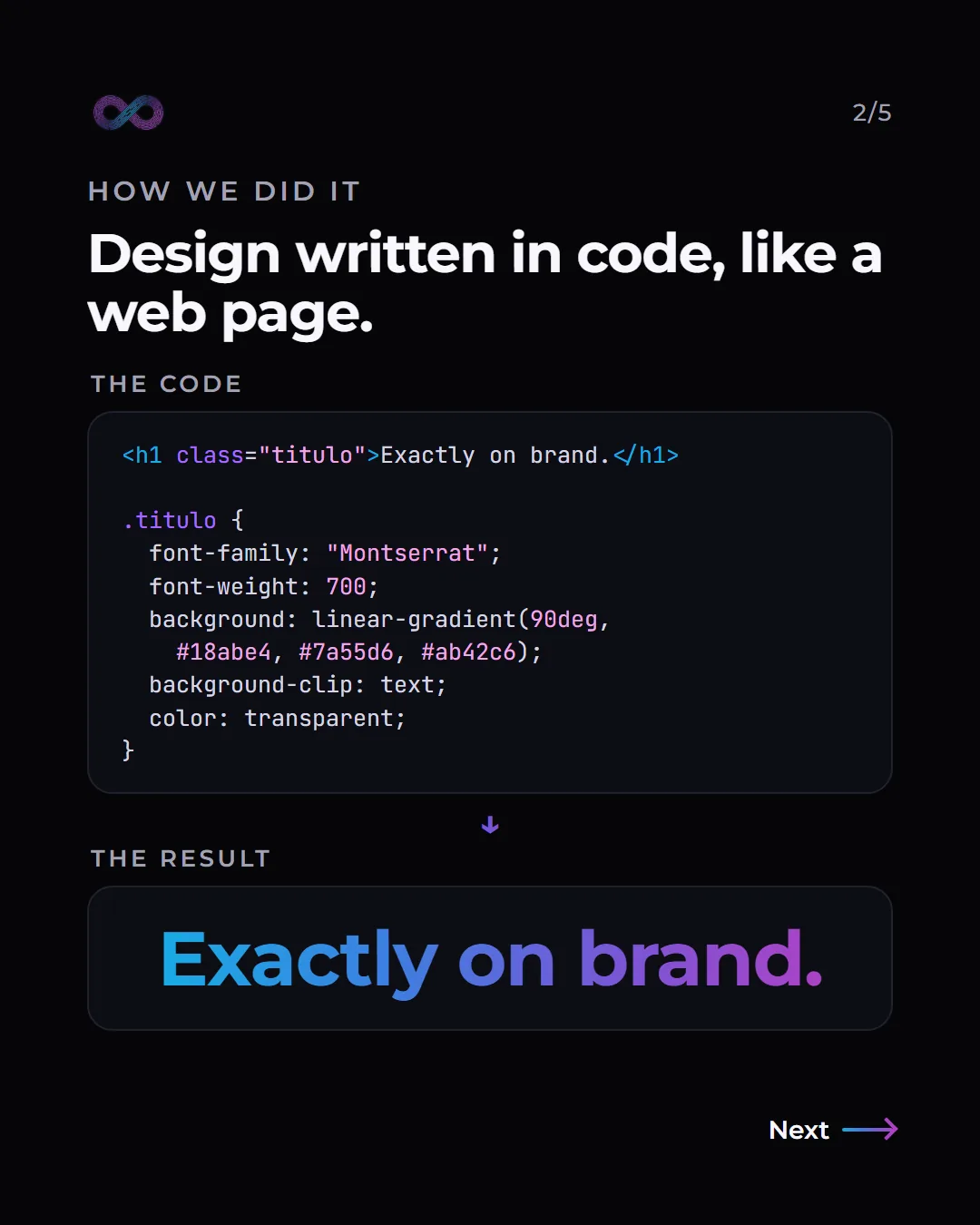
This time we asked Claude Code for the carousel, an AI that works by writing code. Instead of drawing, it did what a web designer would do:
- It wrote each slide as a page in HTML and CSS.
- It used the official SVG file of our logo and our brand typeface, which we already had in our files.
- It turned those pages into images and a PDF ready to upload to LinkedIn.
No image generator and no paid design or image tool. The text is real text, so there are no strange letters, and the colors are the exact brand codes, not an approximation.
How we reviewed it
We reviewed it slide by slide and asked for changes in plain words: "on the cover we want the official logo", "this has to be changeable in every post". It made them and generated it again exactly the same, without anything else moving. When a slide spilled over at the bottom, it fixed that too without touching the others.
That is the advantage we liked most. With a generated image, asking for a change means rolling the dice again: it may come out better or worse, and what was fine can get ruined. With code, changing a sentence means changing a sentence. Everything else stays as it was.
We now have the cover and the closing slide saved as a template. Every new carousel starts from there, and only the content changes.
What we learned along the way
Not everything worked the first time. With a later carousel made the same way, the PDF looked fine but stuttered when flipping through the pages in Acrobat Reader. The cause was in the export: many gradients drawn as vectors and a typeface embedded in a way that was heavy for the reader. We solved it by exporting with the typeface in fixed files, one per weight, and leaving the small details in flat color. The carousel looks the same and the PDF runs smoothly.
It is the kind of problem that only shows up when you test the result where it will be seen, not on the screen where it is made. The same happens with websites: we check them on a real phone before signing off on them.
What each type of AI does well
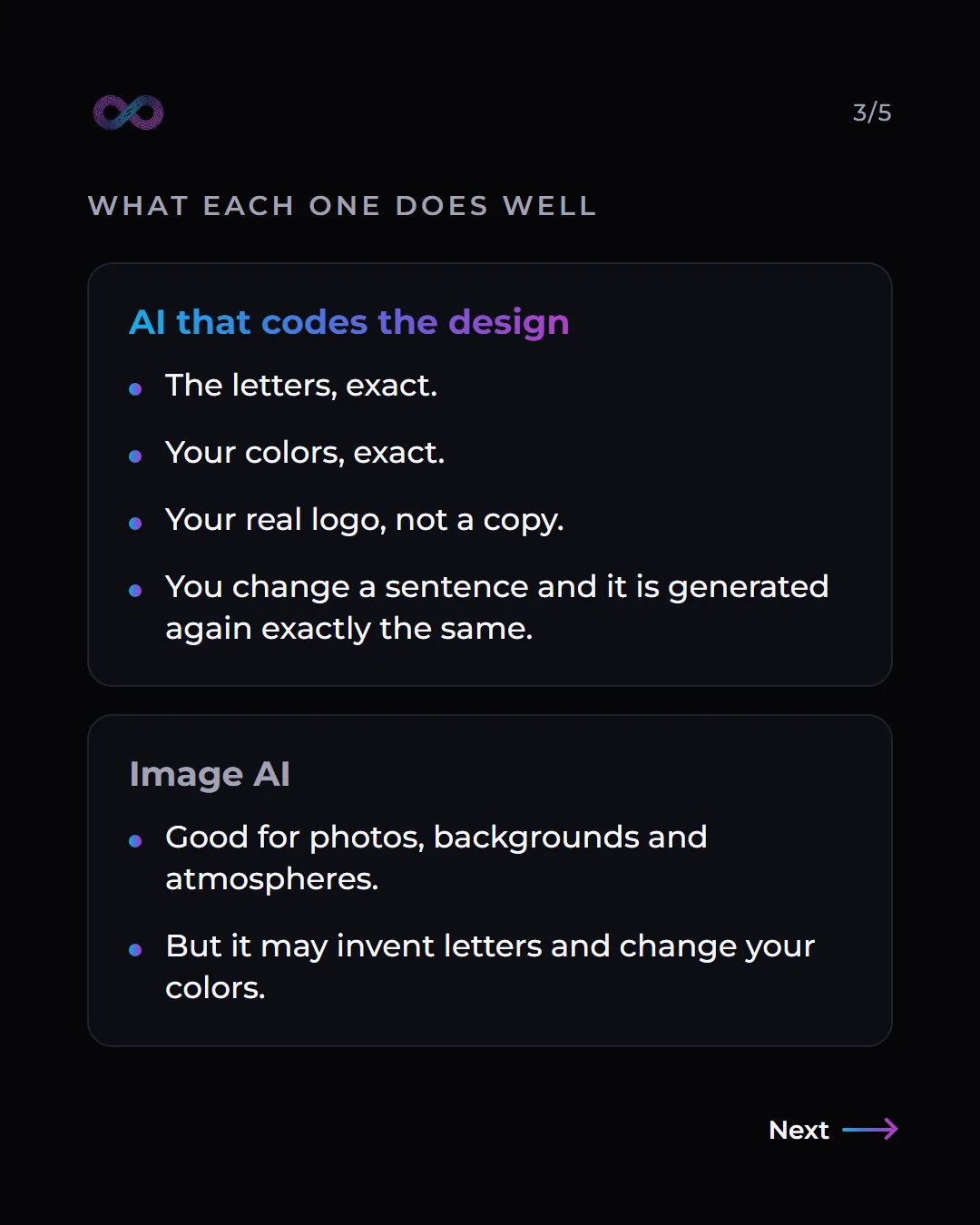
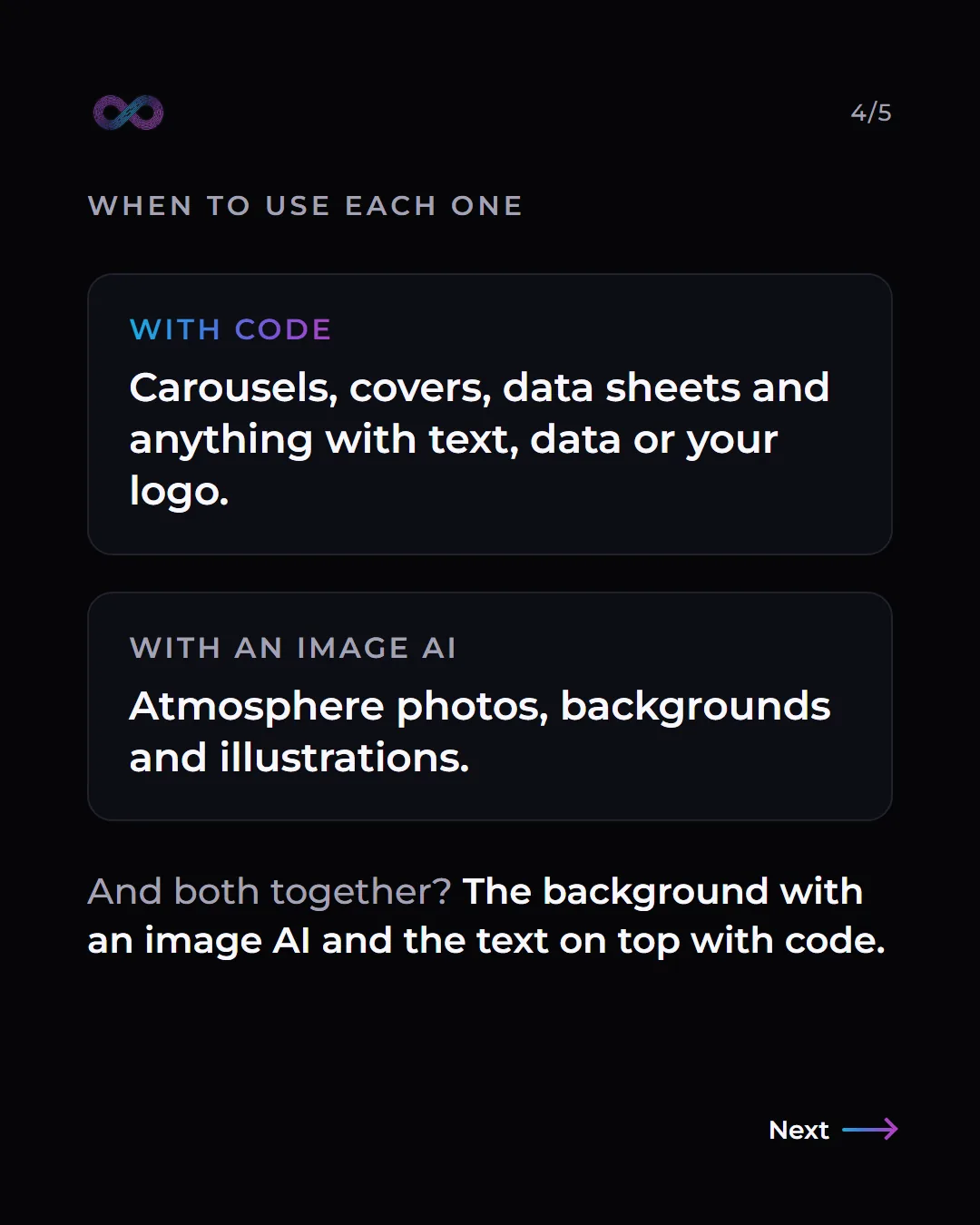
An AI that codes the design is the right choice for carousels, covers, product sheets, presentations and anything with text, data or a logo. Exact letters, exact colors, your real logo and changes without surprises.
An image AI is the right choice for photos, backgrounds, atmospheres and illustrations. That is where it shines. With text and branding, on the other hand, it may invent letters and change your colors.
And they can be combined: the background with one and the text on top with the other. The photo brings the atmosphere and the code makes sure the text and the brand come out exact.
What it means for a small business
If your business often prepares pieces with text and branding (posts, product sheets, offers or posters for the shop), it is worth having a template built with code. It is set up once with your logo, your colors and your typeface, and from then on each new piece is just a matter of changing the text.
It is the same way we work on our custom websites: the design starts from the real brand, with its measured colors and its original logo, and it is built with code so it looks the same everywhere. And if you want those pieces to be generated automatically from your data, we treat it as an AI automation.
Frequently asked questions
What is Claude Code?
It is an AI from Anthropic that works by writing and running code. Instead of generating an image, it can write the design as a web page and then turn it into images or a PDF.
Do you need to know how to code to work this way?
To ask for changes, no: you ask for them in plain words. To set up the template the first time and check that everything comes out right, it helps to know what you are doing, and that is the part we can leave done for you.
Why do image AIs get text wrong?
Because they draw the letters instead of writing them. They imitate what text looks like, and that is why they sometimes invent a stroke or change a color.
When is an image AI the better choice?
For photos, backgrounds, atmospheres and illustrations, where there is no text or logo that has to come out exact.